
We often think that doing more means taking better care of our hair.
Rub it harder. Massage it longer. Towel se zor-zor se dry karo. Product lagate waqt baalon ko aggressively rub karo.
But sometimes, your hair simply needs less force and more gentleness.
A simple rule can make your hair-care routine easier:
Spray it. Spread it gently. Leave it alone.
Why Do We Keep Rubbing Our Hair?
It is a common habit.
After applying a hair product, we rub our scalp and hair repeatedly because we feel that the product needs to be “worked in.”
But hair strands are not indestructible. Repeated friction, especially when hair is wet or already fragile, can contribute to hair shaft damage and breakage.
That doesn't mean every time you rub your hair, it will immediately become damaged.
The point is simple:
Unnecessary rubbing doesn't automatically make your hair healthier.
Try the Spray-and-Leave Approach
If you are using a suitable hair or scalp spray, you don't necessarily need to keep rubbing it into your hair for minutes.
Instead:
Step 1 — Spray
Apply the product according to its instructions. If it is a scalp product, focus on the scalp rather than unnecessarily soaking the hair lengths.
Step 2 — Spread Gently
If the instructions require spreading, use your fingertips gently. There is no need for aggressive scratching or vigorous rubbing.
Step 3 — Let It Sit
Give the product time to work according to its instructions.
That's it.
You don't need to turn your hair-care routine into a workout.
Wet Hair Needs Extra Care
One situation where being gentle becomes even more important is after washing your hair.
Wet hair can be more prone to stretching and breakage.
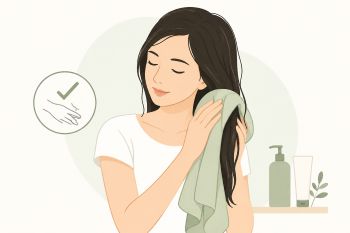
So instead of vigorously rubbing your wet hair with a towel, gently squeeze out excess water and pat or wrap your hair with a soft towel.
Think of your hair like a delicate fabric.
You wouldn't scrub an expensive silk shirt aggressively every day.
Your hair deserves similar care.
What About Scalp Massage?
This doesn't mean scalp massage is bad.
A gentle scalp massage can feel relaxing and can be part of a normal hair-care routine.
The problem is excessive force.
Your nails don't need to scratch the scalp, and your fingers don't need to aggressively pull or rub the hair.
Use your fingertips and keep the pressure comfortable.
If your scalp hurts after a massage, that's probably a sign that you're being too rough.
More Rubbing Does Not Mean More Results
This is where many hair-care routines go wrong.
People sometimes believe:
“Jitna zyada rub karunga, utna product andar jayega.”
But more friction doesn't automatically mean better absorption or better results.
Different products are designed differently. Some are leave-in products, some are scalp treatments, some are styling products, and some need to be washed off.
So the product instructions matter more than internet hacks.
Always check how the particular product is supposed to be used.
A Simple Hair-Care Rule
The next time you apply a suitable hair product, remember:
Spray → Spread gently → Leave it → Follow the product instructions.
No unnecessary rubbing.
No aggressive scratching.
No pulling the hair repeatedly.
Just a simple, gentle routine.
Can This Prevent Hair Fall?
Be careful with this claim.
Gentler hair handling may help reduce mechanical hair breakage, but hair fall can have many different causes.
Hair shedding may be related to genetics, hormonal changes, nutritional issues, illness, stress, scalp conditions, certain medicines and other factors.
So if you are experiencing significant or persistent hair loss, simply stopping hair rubbing may not solve the problem.
That's when it is better to understand the actual cause instead of trying one hair-care trick after another.
The Bigger Lesson
Good hair care is not always about adding more products.
Sometimes it is about removing unnecessary habits.
Don't constantly pull your hair.
Don't aggressively rub wet hair.
Don't scratch your scalp with your nails.
And don't assume that more product or more force means better results.
Your hair doesn't need a fight.
It needs consistent, gentle care.
Final Takeaway
Apne baalon ko har baar ragadne ki zarurat nahi hai.
If your product is designed to be sprayed or applied directly, follow its instructions, spread it gently if required, and let it do its job.
Spray karo. Gently spread karo. Baith jao.
Simple hair care can sometimes be the best hair care.
FAQs
1. Does rubbing hair cause hair fall?
Excessive rubbing can contribute to hair breakage, especially when hair is wet or fragile. However, true hair shedding can have many other causes.
2. Is rubbing wet hair bad?
Aggressive rubbing of wet hair can increase friction and contribute to breakage. Gently squeezing or patting the hair is a better approach.
3. Should I massage my scalp?
A gentle scalp massage can be comfortable for many people. Avoid excessive pressure, scratching or pulling.
4. Should I rub a hair spray into my scalp?
It depends on the product. Follow the manufacturer's instructions. Some products are meant to be sprayed and left alone, while others may require gentle spreading.
5. Does less rubbing make hair grow faster?
Not necessarily. Being gentle can help reduce unnecessary mechanical damage, but hair growth depends on many biological factors.
Myth vs Fact
Myth: The harder you massage, the better the hair treatment works.
Fact: More force does not automatically mean better results.
Myth: Rubbing your scalp aggressively increases hair growth.
Fact: There isn't a simple rule that aggressive rubbing makes hair grow faster.
Myth: All hair fall happens because of weak hair.
Fact: Hair shedding can have many causes.
Myth: Wet hair can be rubbed normally with a towel.
Fact: Wet hair can be more vulnerable to mechanical damage, so gentle handling is preferable.
Myth: Using more hair product gives better results.
Fact: The right amount and correct application matter more than simply using more.
- Hair Loss: Common Causes, Myths & Facts
- Nutrition for Healthy Hair
- Protein and Hair Health
- Stress and Hair Fall
- Vitamins & Minerals Your Body Needs
- Scalp Care Guide
Disclaimer
This article is for general health and wellness awareness only. It is not a substitute for professional medical advice, diagnosis or treatment. Hair loss and scalp problems can have different causes. If you have persistent, sudden or significant hair loss, scalp pain, itching, sores or other concerning symptoms, consult a qualified healthcare professional or dermatologist.